November is Epilepsy Awareness Month, and it is a good time for every parent, teacher, and coach to learn what a seizure looks like and how to help.
If your child has epilepsy, you already know how much it can shape daily life. If you don’t, chances are you know a family who lives with it. Either way, a little knowledge goes a long way toward keeping kids safe and making sure they feel included.
Understanding Epilepsy in Children
Epilepsy is a brain condition that causes repeated, unprovoked seizures. A seizure is a sudden burst of electrical activity in the brain that can briefly change how a person moves, feels, or acts. Having a single seizure does not always mean a child has epilepsy, which is why a careful evaluation by a neurologist matters.
Epilepsy Is More Common Than Most People Think
Approximately 470,000 children in the United States are living with active epilepsy, according to published research. Across all ages, approximately 3.4 million people in the United States are affected, representing roughly 1.2% of the population.
Epilepsy can affect children of all ages. Recognizing possible symptoms and obtaining an appropriate medical evaluation can help families better understand the condition and explore treatment options.
Not Every Seizure Involves Shaking
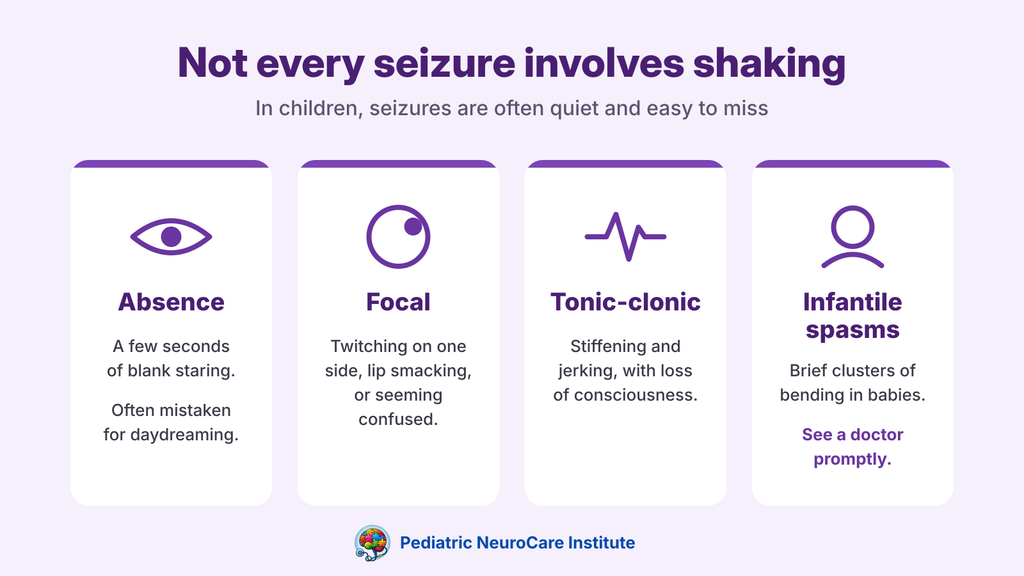
Many people picture a seizure as someone falling down and convulsing. However, seizures in children can look very different. Some are subtle and easy to miss. Common types include:
- Absence seizures: Brief episodes of staring, sometimes accompanied by fluttering eyelids. These episodes may last only a few seconds and can happen many times a day. They are sometimes mistaken for daydreaming or inattention.
- Focal seizures: Seizures that begin in one area of the brain. A child may twitch on one side of the body, smack their lips, fumble with their hands, or appear confused or unaware of their surroundings.
- Tonic-clonic seizures: These are the seizures many people recognize. They can involve stiffening of the body, jerking movements of the arms and legs, and loss of consciousness.
- Infantile spasms: Brief clusters of sudden bending or stiffening movements in babies, often occurring shortly after waking. These require prompt medical evaluation.
If you notice repeated staring spells, unusual movements, or episodes your child cannot remember, write down what you observed. If possible, safely record a video of the episode to share with your child’s doctor. Discuss your concerns with your pediatrician or a pediatric neurologist.
Seizure First Aid: Stay, Safe, Side
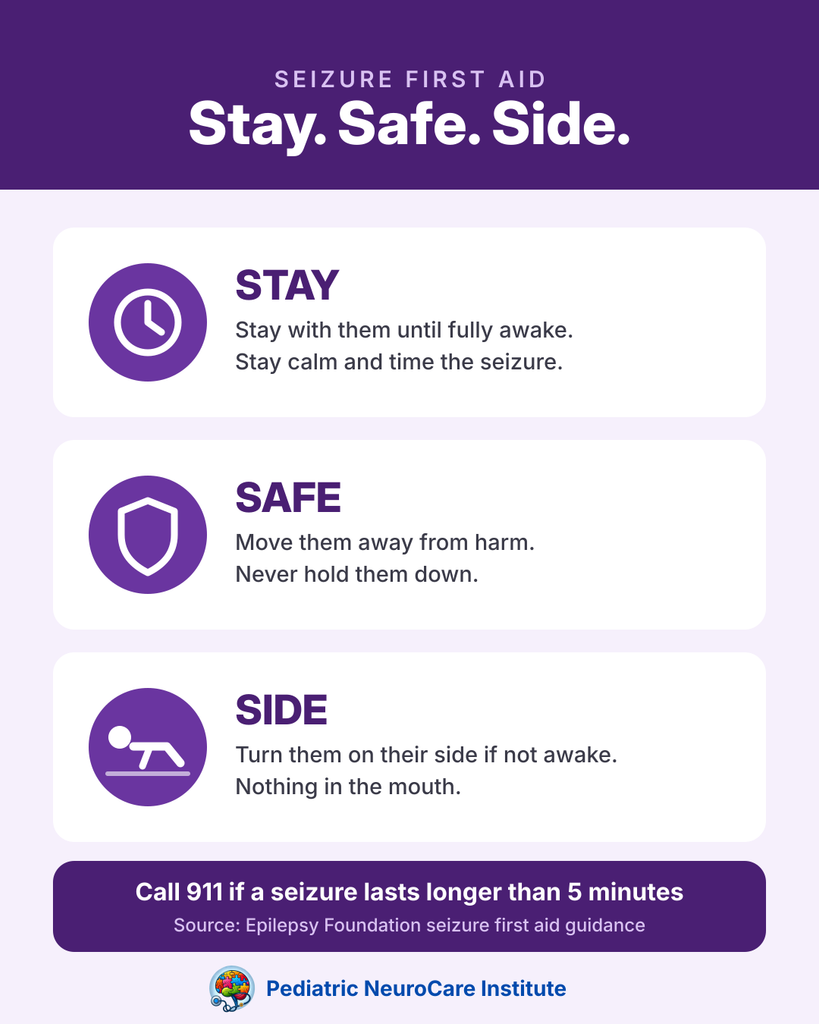
Knowing what to do during a seizure can make a big difference. Remember these three simple words: Stay, Safe, Side.
- Stay: Stay with the child until they are fully awake and alert. Remain calm, start timing the seizure, and check for a medical ID.
- Safe: Move the child away from stairs, furniture edges, water, or anything sharp. Place something soft under their head and keep bystanders at a safe distance.
- Side: If the child is not fully awake or aware, gently turn them onto their side when it is safe to do so. This can help keep the airway clear. Loosen tight clothing around the neck.
Do not force the child into a different position or try to stop their movements during a seizure. Focus on protecting them from injury.
What Not to Do During a Seizure
- Do not hold the child down or try to stop their movements.
- Do not put anything in their mouth. A person cannot swallow their tongue.
- Do not give food, water, or medication by mouth until they are fully awake and alert.
- Do not attempt to move the child unless they are in immediate danger.
Most seizures end on their own within a few minutes. Afterward, children may feel tired, confused, or disoriented. Speak calmly, reassure them, and allow them to rest while monitoring their recovery.
When Should You Call 911?
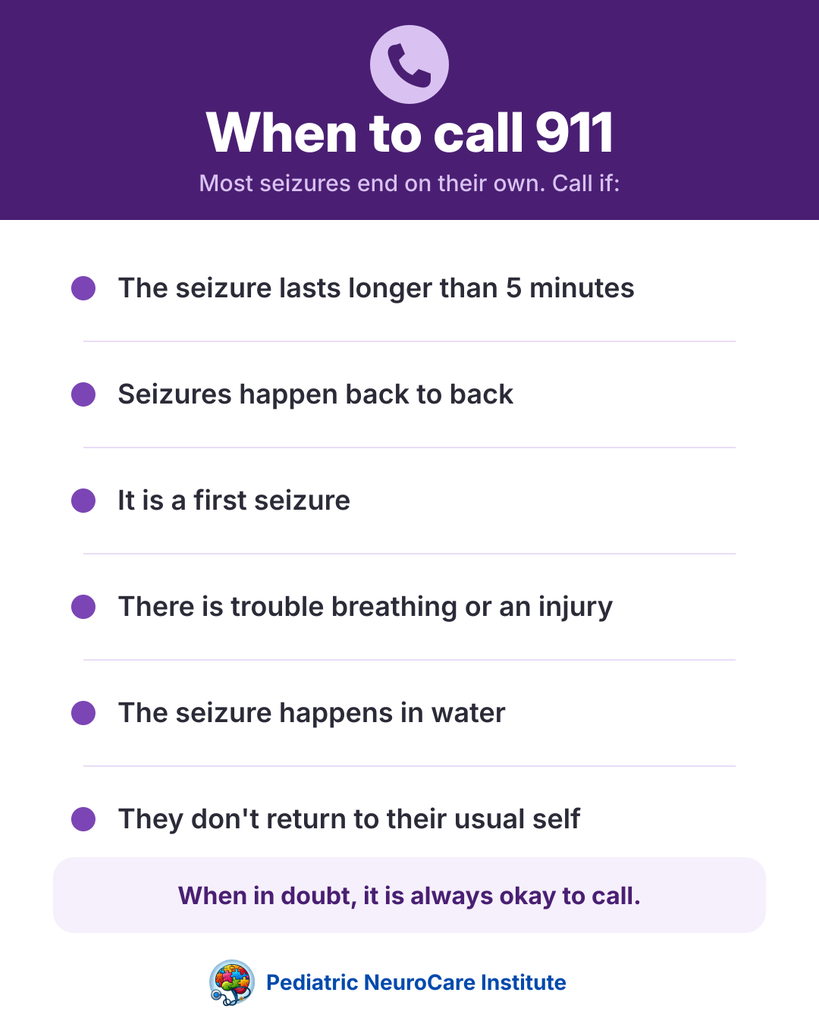
Although many seizures stop on their own, some situations require emergency medical attention. Call 911 if:
- The seizure lasts longer than five minutes.
- The child has another seizure shortly after the first one.
- The child has difficulty breathing or does not wake up as expected after the seizure.
- The child is injured during the seizure.
- The seizure happens in water.
- The child has their first seizure.
If your child has a seizure action plan, follow its emergency instructions and use prescribed rescue medication only as directed.
Helping Kids With Epilepsy Thrive
With appropriate care and support, many children with epilepsy go to school, play sports, and enjoy activities with their friends. A few important steps can help make that possible:
- Make a seizure action plan. This document outlines your child’s seizure types, first aid steps, prescribed rescue medications, and emergency contacts. Share it with teachers, the school nurse, coaches, babysitters, and family members.
- Keep up with medications and sleep. Missed medication doses and insufficient sleep can increase the risk of seizures in some children. Follow your child’s treatment plan and maintain a consistent sleep schedule.
- Plan for safety around water. Young children should never bathe alone, and swimming should always be supervised by someone who understands seizure first aid.
- Talk openly. Help your child understand their condition in age-appropriate terms and encourage questions. Children who understand epilepsy may feel more confident and less afraid.
- Watch the bigger picture. Epilepsy can affect learning, mood, and attention. Let your child’s doctor and care team know about changes you notice at school or home.
How You Can Help This November
- Learn seizure first aid. Share the Stay, Safe, Side steps with family, friends, and your child’s school. The Epilepsy Foundation offers educational resources and seizure first aid training at epilepsy.com.
- Wear purple. Purple is the color associated with epilepsy awareness. Wear it to show support and help start conversations about epilepsy.
- Share this article. Help more parents, teachers, coaches, and caregivers learn how to recognize seizures and respond safely.
We’re Here for Your Family
If you have questions about seizures, staring spells, or your child’s epilepsy care, our team at Pediatric NeuroCare Institute is here to help.
Dr. Himali Jayakody is a fellowship-trained, board-certified pediatric epileptologist who is dedicated to helping children and families navigate epilepsy care. Our team is here to support you throughout your child’s care journey.
Call us at 813-553-4448 to learn more or schedule an appointment.
This article is intended for general educational purposes only and is not a substitute for professional medical advice, diagnosis, or treatment. Always consult your child’s healthcare provider about their individual medical needs.